Please enjoy an excerpt from my book, Winning the Injury Game, available on Amazon.

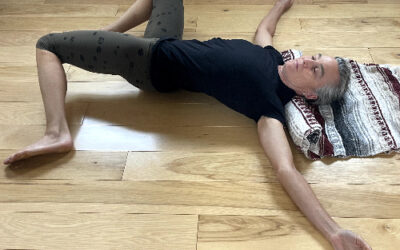
Muscles need to be balanced between the front and back as well as the left and right sides of the body to maintain aligned posture. Aside from the rounding of the upper body, another common postural imbalance is typically seen at the pelvis. The hip flexors (at the front of the body) and the hamstrings (at the back of the body) work in opposition to hold the pelvis in position. In my posture, depicted to the right, and in many of my athletic clients, the hip flexors are tight and short, pulling the pelvis too far forward, which creates extra length and tension in the hamstrings, as shown in Figure 8-3(b).
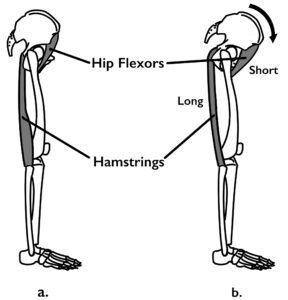
Figure 8-3 Image (a) above illustrates a neutral pelvic position, while image (b) on the upper right depicts a forwardly tilted pelvis with tight, short and weak hip flexors opposing tight, long and weak hamstrings.
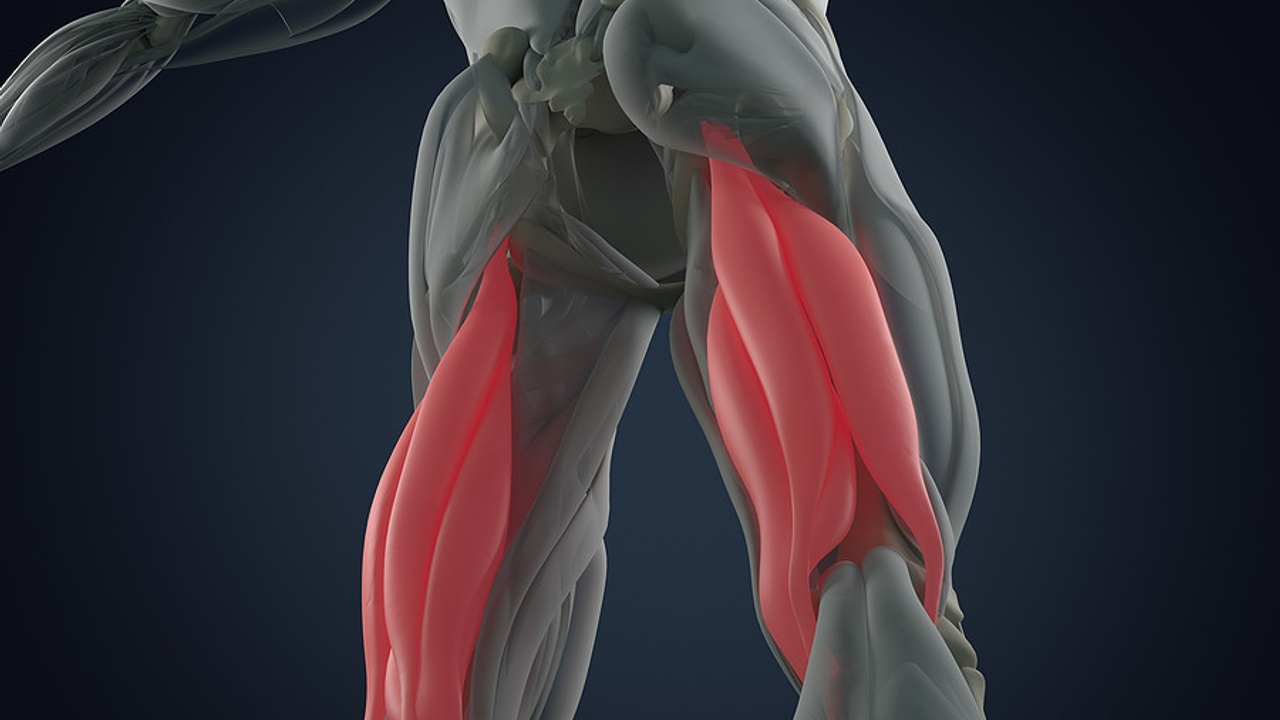
In this scenario the hamstrings are too long and tight. The last thing they need is to be stretched and lengthened farther. But of course, that’s exactly what many of us do, including me. Feeling tightness in the muscles on the back of my thighs and being ingrained with the notion that hamstrings always need to be stretched, I regularly over lengthened these muscles with deep stretches. If you stretch an already lengthened rubber band, what happens? Greater tension develops, and it is more likely to break. Hamstring strain, anyone?
Functional hamstring length is 90-degrees, as I will demonstrate in the next section. When you go much beyond this, it can lead to problems with stability and muscle usage. Overstretched hamstrings was one of my major alignment issues, which I will discuss in Chapter 11.