Strength Training for Better Posture: Shoulder Shrugs

Use your time in the gym to improve your structural alignment, not ingrain poor posture and compensated movement patterns.


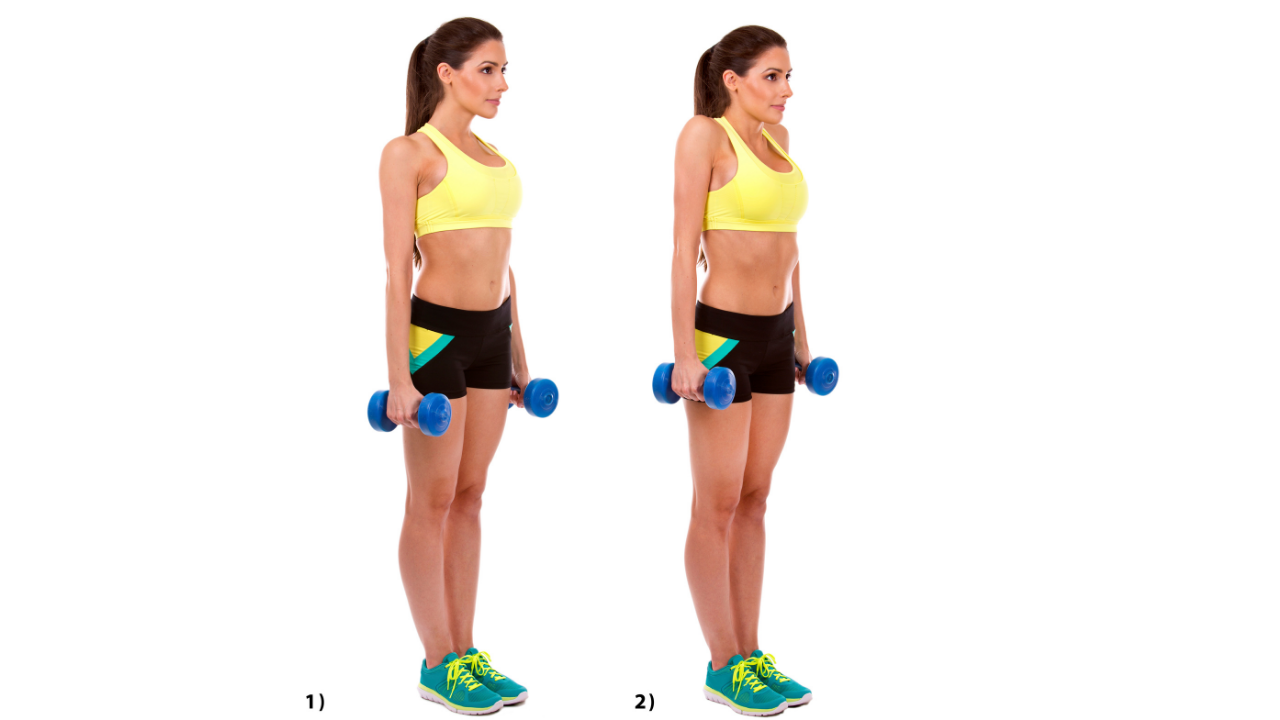
Starting Position

  • A staggered stance (1-2 feet apart) accommodates wider hips and larger dumbbells.

  • The head, shoulders and hips are vertically aligned with the belly relaxed.

  • Dumbbell heads are facing forward to keep the weights close to the body, creating a straight arm line from the shoulder to the wrist.

Movement

  • Prior to initiating the shrug the shoulder blades are pulled down and together into retraction. The shoulder blades remain pinched together throughout the entire exercise.

  • Shoulders are raised directly up towards the ears. Watch in a mirror to make sure the shoulders are level with each other at the top of the range of motion.

  • The head and neck remain relaxed and neutral as the shoulders raise. Commonly, the neck will tense and the head goes forward.

  • Upon reaching the top of the range of motion, keep the shoulder blades together and depress the scapula down towards the feet. Feel the muscles below the shoulder blades tighten to draw the bones down.

  • The movement of the shoulders is synchronous, both raising and lowering at the same speed together.

  • At the bottom of the range of motion hold the contraction for 1-2 seconds then relax the shoulders back to the neutral starting position.
 

Related Posts

Knees over Toes: Breaking One of the Most Common Rules

Knees over Toes: Breaking One of the Most Common Rules

Your knees are designed to move over your toes. This functional motion is necessary in many common movements, including rising from a chair, using stairs, deep lunging and squatting, hiking, and more. Unfortunately, the message to keep the knees inline or behind the...

A Simple Drill to Improve Your Walking Gait

A Simple Drill to Improve Your Walking Gait

Why is it important to walk properly? You might be surprised. . .   Walking is our most innate form of forward locomotion and our most basic form of transportation. Although often taken for granted, the complex synchronization, balance, posture, biomechanics, and...

About the Author

Jessica

Jessica uses an integrative approach to help you overcome chronic pain. She believes in treating the whole person utilizing the biopsychosocial approach to healing. Her offerings include posture therapy, online exercise classes, pain science education, and individual or group wellness coaching. She is certified by the Postural Restoration Institute® (PRI), Egoscue University®, National Strength and Conditioning Association (NSCA), American College of Sports Medicine (ACSM), American Council on Exercise (ACE) and Wellcoaches.